
 EN
 Italian
 Spanish
 Turkish
 Japanese
 Portuguese
 Dutch
 Korean
 Russian
 French
 German
 Arabic
 Indonesian



 ALL

 Company News

 Industry News

 Product Knowledge
How to Maintain Tie-Down Straps and Extend Their Service Life?
Nov. 23, 2026
Views:5
Tie-down straps are essential tools for securing cargo during transportation, storage, and material handling. They are widely used in trucking, logistics, construction, warehousing, and equipment transportation. From securing heavy machinery on flatbed trailers to keeping palletized goods stable during long-distance delivery, reliable tie-down straps help reduce cargo movement and improve transportation safety.
However, even high-quality tie-down straps can deteriorate over time if they are not properly used, cleaned, inspected, and stored. Exposure to sunlight, moisture, dirt, chemicals, sharp edges, and excessive tension can gradually weaken the webbing and damage the hardware. Without regular maintenance, minor defects may develop into serious safety risks.
For fleet operators, logistics companies, distributors, and industrial buyers, understanding how to maintain tie-down straps is important not only for extending product service life but also for maintaining consistent cargo securement performance.
So, how can businesses keep their tie-down straps in good condition for longer? This article explains practical maintenance methods, common causes of damage, inspection procedures, and storage recommendations.
1. Understand the Main Factors That Affect Tie-Down Strap Service Life
Before establishing a maintenance routine, it is important to understand why tie-down straps wear out. Different operating environments create different types of stress, and identifying these factors helps users prevent premature deterioration.
UV Exposure and Outdoor Conditions
Many tie-down straps are manufactured from synthetic webbing, such as polyester or nylon. Although these materials offer good tensile strength and durability, prolonged exposure to ultraviolet radiation can gradually affect their physical properties.
For example, straps frequently used on outdoor construction sites or open flatbed trailers may experience continuous sunlight exposure. Over time, UV radiation can contribute to fading, fiber degradation, and reduced material strength.
Rain, snow, and temperature fluctuations can also affect the condition of straps and their metal components.
To reduce environmental damage, users should avoid leaving tie-down straps exposed to direct sunlight for unnecessary periods when they are not in use.
Abrasion and Mechanical Friction
Abrasion is one of the most common causes of damage to tie-down straps.
When webbing repeatedly rubs against rough cargo surfaces, trailer edges, metal corners, or other equipment, individual fibers may gradually become worn.
Sharp edges are particularly problematic because they can cut through the webbing under tension.
For example, securing steel pipes, machinery, or construction materials without suitable edge protection may cause localized damage even when the strap has a high Working Load Limit (WLL).
Excessive Tension and Improper Loading
Every tie-down strap has a specified Working Load Limit. Applying forces beyond its rated capacity can overstress the webbing, stitching, ratchet mechanism, and connecting hardware.
Over-tightening does not necessarily make cargo more secure. Instead, it may damage the strap assembly or deform the cargo being secured.
Users should follow the manufacturer's operating instructions and applicable cargo securement requirements rather than applying excessive force.
Moisture, Chemicals, and Contamination
Dirt, oil, grease, cleaning chemicals, and industrial contaminants can accumulate on tie-down straps during daily operation.
Some substances may affect the webbing fibers or make the ratchet mechanism difficult to operate. Moisture trapped in folded or tightly packed straps can also encourage corrosion of metal components and create unfavorable storage conditions.
Regular cleaning and proper drying are therefore important parts of tie-down strap maintenance.
2. Inspect Tie-Down Straps Before and After Every Use
Regular inspection is one of the most effective ways to identify potential problems before they affect cargo securement.
A visual inspection before use helps determine whether a strap is suitable for the intended application. Checking the equipment again after use can reveal damage caused during transportation.
Check the Webbing Surface
Start by examining the entire length of the strap.
Look for the following warning signs:
Cuts, tears, or holes in the webbing
Frayed or broken fibers
Excessive abrasion or thinning
Burn marks or heat damage
Chemical discoloration or visible deterioration
Stretched or deformed sections
Missing or illegible identification labels
Pay particular attention to areas that contact cargo edges, trailer surfaces, and other hardware.
Even relatively small cuts can affect the integrity of a tie-down strap. A strap showing damage that could compromise its strength should not be returned to service.
Examine the Stitching
Stitching connects different sections of webbing and plays an important role in the strength of a tie-down strap assembly.
Inspect the stitched areas around hooks, ratchet mechanisms, and loop connections.
Loose threads, broken stitches, separated seams, or damaged reinforcement patterns may indicate that the strap has been overloaded or subjected to repeated mechanical stress.
Users should never attempt to repair load-bearing stitching with ordinary sewing equipment and then assume that the original WLL remains valid.
Inspect Ratchets, Hooks, and Buckles
The metal hardware also requires regular inspection.
For ratchet tie-down straps, check whether the handle moves smoothly, the locking mechanism engages correctly, and the release function operates as intended.
For hooks and connecting fittings, look for:
Cracks or visible deformation
Bent or twisted sections
Corrosion or excessive rust
Damaged safety latches
Sharp edges or burrs
Loose connections
If a ratchet mechanism becomes difficult to operate or a hook shows structural damage, the affected assembly should be removed from service until it has been properly evaluated.
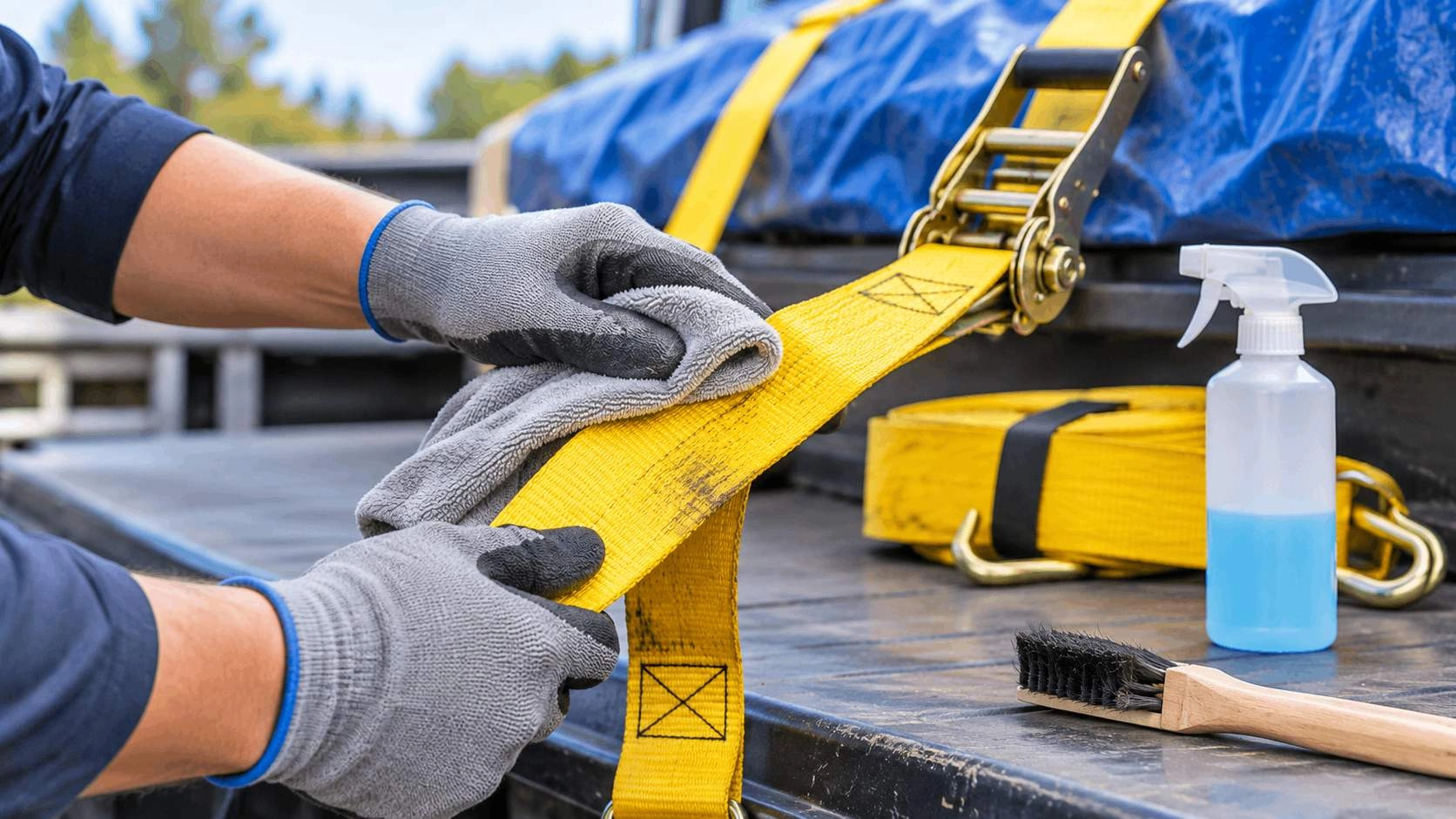
3. Clean Tie-Down Straps Using Suitable Methods
Cleaning helps remove contaminants that may gradually affect the condition of webbing and hardware. However, cleaning methods should be appropriate for the strap material and the manufacturer's recommendations.
Remove Loose Dirt and Debris
After using tie-down straps, shake off loose dust, sand, and other debris.
For accumulated dirt, use a soft brush to clean the webbing surface. Avoid aggressive scrubbing that could damage the fibers.
This is particularly important for straps used in construction, agricultural transportation, and outdoor logistics, where dirt and abrasive particles are common.
Use Mild Cleaning Solutions
When more thorough cleaning is necessary, use a mild cleaning solution that is compatible with the webbing material.
Avoid strong acids, alkalis, solvents, bleach, or other aggressive chemicals unless the manufacturer specifically confirms their suitability.
Harsh cleaning agents may weaken synthetic fibers, damage protective coatings, or affect the appearance and durability of the webbing.
For oil and grease contamination, consult the manufacturer's cleaning guidance. If contamination cannot be safely removed or its effects on the strap material are uncertain, the strap should be evaluated before further use.
Rinse and Dry Completely
After cleaning, rinse away any remaining detergent or cleaning solution if the manufacturer's instructions require it.
Allow the webbing to dry naturally in a well-ventilated area.
Avoid placing wet tie-down straps near open flames, heaters, or other high-temperature sources. Excessive heat can damage synthetic fibers and reduce their performance.
Never pack damp straps into sealed storage containers for extended periods.
4. Protect Tie-Down Straps from Sharp Edges and Abrasion
Preventing mechanical damage during operation is just as important as cleaning and inspection.
In many applications, premature strap failure is associated with contact against sharp cargo edges or rough surfaces.
Use Edge Protectors
Edge protectors help distribute pressure and reduce direct friction between the webbing and cargo edges.
They are particularly useful when securing:
Steel sheets and metal components
Industrial machinery
Construction materials
Pipes and structural sections
Wooden products with rough surfaces
Depending on the cargo shape, users can choose suitable corner protectors, sleeves, or other protective accessories.
The protective equipment should be compatible with the strap and cargo arrangement. It must not introduce additional hazards or interfere with proper securement.
Avoid Twisting the Webbing
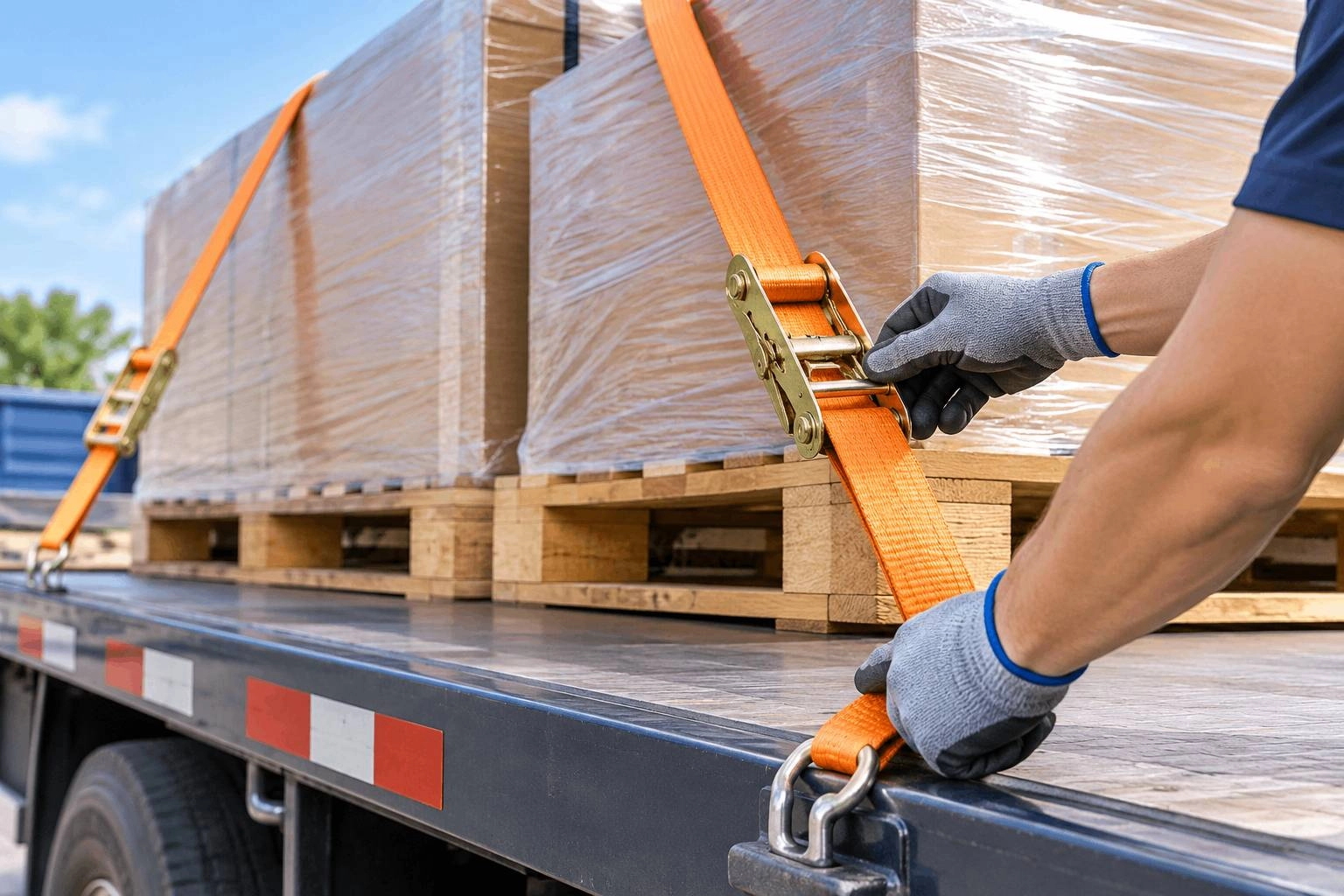
Tie-down straps should lie flat during installation.
Twisted webbing can create uneven tension distribution and concentrated stress in certain areas. It may also make the strap more susceptible to abrasion during transportation.
Before tightening a ratchet strap, check that the webbing is properly aligned and free from knots or twists.
Keep Straps Away from Moving Components
When securing machinery or equipment, make sure the webbing does not contact rotating parts, sharp mechanical edges, or surfaces that may become excessively hot.
This is especially important in industrial transportation and equipment handling environments.
5. Maintain Ratchet Mechanisms and Metal Hardware
The ratchet mechanism is a critical part of many heavy-duty tie-down straps. Proper maintenance helps preserve smooth operation and reliable locking performance.
Keep Ratchets Clean
Dust, sand, and debris can accumulate inside the ratchet mechanism and interfere with its operation.
Use a suitable brush or cleaning method to remove loose contaminants. Avoid forcing the handle when the mechanism becomes stuck.
If the ratchet remains difficult to operate after cleaning, it should be inspected for internal damage or deformation.
Check for Corrosion
Metal components may be exposed to moisture, road salt, and outdoor environmental conditions.
Inspect hooks, buckles, ratchet assemblies, and other fittings for rust or corrosion.
Light surface contamination may be removable, but corrosion that causes pitting, material loss, deformation, or compromised function can affect component strength.
Damaged hardware should not be reused simply because the webbing still appears to be in good condition.
Lubricate Only When Recommended
Some ratchet mechanisms may require occasional lubrication to maintain smooth movement.
However, lubricant should only be applied according to the manufacturer's instructions.
Excessive lubricant can attract dirt and dust, while unsuitable products may contaminate the webbing or interfere with the mechanism.
The goal is to maintain proper hardware function without introducing additional maintenance problems.
6. Store Tie-Down Straps Properly Between Uses
Correct storage is essential for extending the service life of tie-down straps, particularly for businesses that operate large fleets or maintain substantial inventories.
Poor storage conditions can expose webbing and hardware to unnecessary damage even when the straps are not being used.
Store in a Dry and Ventilated Area
Choose a clean, dry storage location away from direct sunlight, excessive heat, and chemical exposure.
A ventilated environment helps prevent moisture accumulation and reduces the risk of corrosion on metal components.
Avoid storing tie-down straps directly on damp floors or near leaking equipment.
Keep Straps Organized
After cleaning and inspection, coil or fold straps neatly without creating sharp creases or excessive bending.
Use dedicated storage racks, bins, or hanging systems to keep different strap sizes and configurations organized.
Proper organization also makes it easier for workers to identify the correct strap for each application.
Separate Straps from Chemicals and Sharp Objects
Tie-down straps should not be stored alongside sharp metal tools, cutting equipment, fuels, solvents, or industrial chemicals.
These materials may cause accidental cuts, contamination, or chemical degradation.
For warehouses and transportation companies, establishing designated storage areas can significantly reduce unnecessary product damage.
7. Avoid Common Mistakes That Shorten Tie-Down Strap Service Life
Even with regular maintenance, improper operating practices can cause premature wear.
The following mistakes should be avoided.
Using Tie-Down Straps Beyond Their Rated Capacity
Every strap assembly has a specified WLL. Exceeding this limit can cause permanent damage or failure.
Users should never use breaking strength as the allowable working capacity. They should also account for the limitations of hooks, ratchets, anchor points, and the overall securement arrangement.
Using Damaged Straps for Temporary Applications
Some operators continue using worn straps because the cargo is considered lightweight or the transportation distance is short.
This is an unsafe practice. A damaged strap may have reduced strength that cannot be accurately determined through visual estimation alone.
If a strap has defects that compromise its integrity, it should be removed from service regardless of the application.
Leaving Straps Attached When Not Needed
Tie-down straps left exposed on vehicles or trailers between operations may experience unnecessary sunlight, rain, dirt, and mechanical contact.
Whenever practical, remove and store unused straps properly after unloading cargo.
Repairing Straps Without Manufacturer Approval
Improvised repairs, including unauthorized stitching, cutting, welding, or replacing hardware, may change the original assembly characteristics.
Users should follow the manufacturer's repair and replacement policy. If a damaged component cannot be restored through an approved procedure, replacing the strap assembly is generally the safer option.
8. Establish a Regular Tie-Down Strap Inspection and Maintenance Program
For businesses that use tie-down straps frequently, relying only on individual workers to notice visible damage may not be sufficient.
A structured maintenance program helps standardize inspection procedures and improve equipment management.
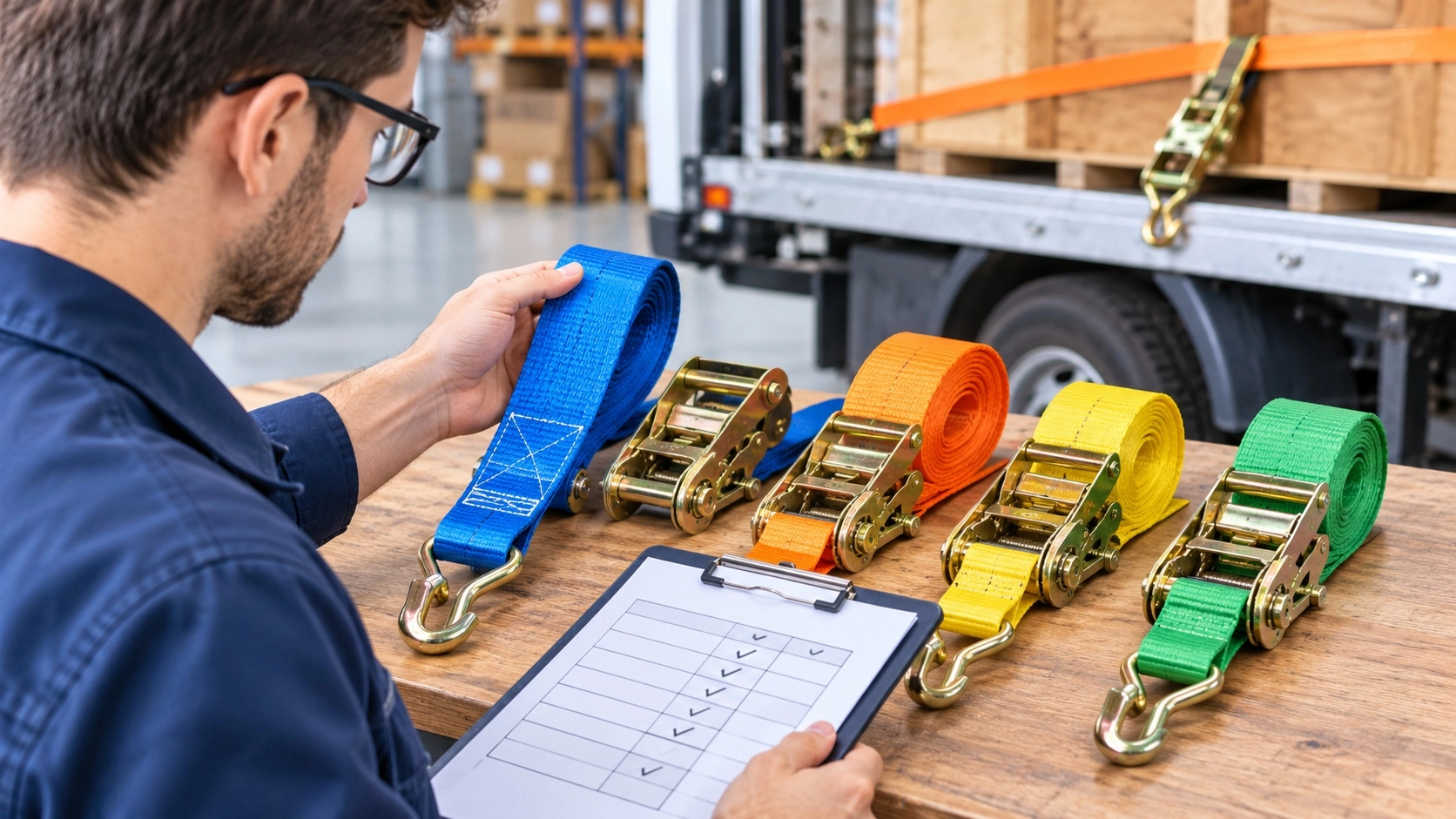
Create an Inspection Checklist
A basic inspection checklist can include:
Inspection Item | What to Check |
|---|---|
Webbing | Cuts, fraying, abrasion, discoloration |
Stitching | Broken threads, loose seams, separation |
Ratchet | Smooth operation and locking function |
Hooks | Cracks, bending, corrosion, deformation |
Identification label | Readability and WLL information |
Cleanliness | Dirt, grease, chemical contamination |
Storage condition | Moisture, sunlight, and physical damage |
Workers should complete inspections before use and follow any additional inspection intervals required by applicable regulations, company procedures, or manufacturer recommendations.
Train Employees in Proper Handling
Employees should understand how to select, install, tighten, release, inspect, and store tie-down straps correctly.
Training should cover WLL identification, cargo securement arrangements, edge protection, defect recognition, and procedures for removing damaged equipment from service.
Consistent operating practices can reduce avoidable wear and improve overall workplace safety.
Maintain Inspection Records
For fleet operators and large logistics businesses, maintaining inspection records helps track equipment condition over time.
Useful records may include:
Product identification or batch information
Purchase and first-use dates
Inspection dates
Identified defects
Maintenance actions
Removal-from-service records
These records can help businesses identify recurring damage patterns and determine whether certain applications require different strap configurations.
9. When Should Tie-Down Straps Be Replaced?
Maintenance can help extend the useful life of tie-down straps, but it cannot restore damaged webbing or hardware to its original condition.
Knowing when to replace a strap is therefore an essential part of equipment management.
A tie-down strap should be removed from service when it has:
Cuts, tears, holes, or significant fiber damage
Broken or damaged load-bearing stitching
Heat or chemical damage
Severe abrasion or visible deterioration
Damaged or deformed hooks and ratchet components
Missing or illegible identification that prevents reliable verification of its rating
Any other defect identified by the manufacturer or applicable safety requirements
There is no universal replacement interval that applies to every tie-down strap. Service life depends on usage frequency, operating conditions, material quality, maintenance practices, and exposure to environmental factors.
A strap used occasionally in a clean warehouse may experience very different wear from one used daily on an outdoor flatbed trailer.
For this reason, replacement decisions should be based on condition, inspection findings, manufacturer guidance, and applicable regulations rather than age alone.
10. Choose Quality Tie-Down Straps to Reduce Long-Term Maintenance Costs
Maintenance is important, but product quality also has a significant influence on service life.
For distributors, wholesalers, fleet operators, and industrial buyers, selecting suitable tie-down straps from the beginning can help reduce premature replacement and unnecessary operating costs.
When evaluating a tie-down strap manufacturer, consider the following factors.
Webbing Material and Manufacturing Quality
Ask about the webbing material, construction, stitching methods, and relevant performance specifications.
Consistent manufacturing processes help ensure that products meet their stated requirements.
Hardware Quality
Ratchets, hooks, and connecting fittings should be selected according to the intended application.
Buyers should evaluate corrosion resistance, mechanical performance, component compatibility, and assembly quality.
Verified Product Specifications
Check the WLL, breaking strength, strap dimensions, material details, and applicable standards.
Reliable product documentation makes it easier for businesses to select suitable products and establish consistent purchasing requirements.
Customization and Production Capability
Different customers may require different strap lengths, webbing widths, colors, ratchet types, hooks, and packaging configurations.
Working with a manufacturer that can support customization and maintain consistent product specifications helps distributors serve different market segments more effectively.
Conclusion
Maintaining tie-down straps properly involves more than occasional cleaning. Regular inspections, suitable cleaning methods, protection against abrasion, hardware maintenance, and correct storage all contribute to longer service life. Equally important, users must understand the limits of each strap assembly and remove damaged products from service rather than relying on temporary repairs or visual assumptions about strength.
For businesses purchasing tie-down straps in bulk, product quality and manufacturing consistency are also important considerations. Choosing suitable materials, reliable hardware, and clearly rated products can make long-term equipment management more efficient. Zhongyi supports different cargo securement requirements with tie-down strap manufacturing solutions, offering buyers a reliable partner for product specifications, customized configurations, and ongoing supply needs.