

 EN
 Italian
 Spanish
 Turkish
 Japanese
 Portuguese
 Dutch
 Korean
 Russian
 French
 German
 Arabic
 Indonesian



 ALL

 Company News

 Industry News

 Product Knowledge
How Often Should Tie-Down Straps Be Inspected and Replaced?
Nov. 25, 2026
Views:5
Tie-down straps play an important role in cargo securement across transportation, logistics, construction, warehousing, and industrial operations. Whether securing heavy machinery on a flatbed trailer, transporting building materials, or keeping palletized goods stable during delivery, properly maintained tie-down straps help prevent cargo movement and reduce transportation risks.
However, even high-quality tie-down straps are subject to wear and deterioration during regular use. Exposure to sunlight, moisture, chemicals, sharp edges, excessive tension, and repeated friction can gradually affect webbing strength and hardware performance. If damaged straps remain in service, they may no longer provide the expected level of cargo restraint.
For fleet operators, logistics companies, distributors, and industrial buyers, an important question is: How often should tie-down straps be inspected and replaced?
There is no single inspection or replacement schedule that applies to every application. The appropriate frequency depends on usage conditions, product specifications, operating environments, and applicable safety requirements. This article explains when to inspect tie-down straps, how to recognize damage, when replacement is necessary, and how businesses can establish an effective maintenance program.
1. Why Regular Inspection of Tie-Down Straps Is Important
Tie-down straps are exposed to different types of mechanical and environmental stress throughout their service life. Even when a strap appears functional, small defects may gradually develop and affect its overall performance.
Regular inspection helps identify these problems before they create safety concerns.
Prevent Unexpected Strap Failure
A damaged tie-down strap may lose some of its original strength. For example, cuts, broken fibers, or damaged stitching can weaken the webbing and reduce its ability to withstand tension.
If a strap fails during transportation, cargo may shift, fall, or collide with other objects. This can damage products, vehicles, and surrounding equipment.
Inspecting tie-down straps before use helps operators identify visible defects and remove unsuitable products from service.
Maintain Cargo Securement Performance
The performance of a cargo restraint system depends on more than the strength of the webbing.
Ratchet mechanisms, hooks, buckles, stitching, anchor points, and strap positioning all contribute to securement performance.
A strap with intact webbing may still be unsuitable if its ratchet mechanism is damaged or its connecting hardware is deformed.
Regular inspections help ensure that the complete tie-down strap assembly remains suitable for its intended application.
Reduce Long-Term Operating Costs
Replacing every tie-down strap after a fixed period can create unnecessary purchasing costs, especially for businesses operating large transportation fleets.
On the other hand, continuing to use damaged straps can lead to cargo losses, equipment damage, and operational disruptions.
A condition-based inspection and replacement program helps businesses identify products that need to be removed from service while keeping suitable equipment available for continued use.
2. How Often Should Tie-Down Straps Be Inspected?
Inspection frequency should reflect how often tie-down straps are used and the conditions they encounter.
For most transportation applications, a practical starting point is to inspect every strap before each use. Additional periodic inspections can help businesses identify gradual deterioration that may not be immediately obvious during routine loading operations.
Before Every Use
A pre-use inspection is one of the most important maintenance practices.
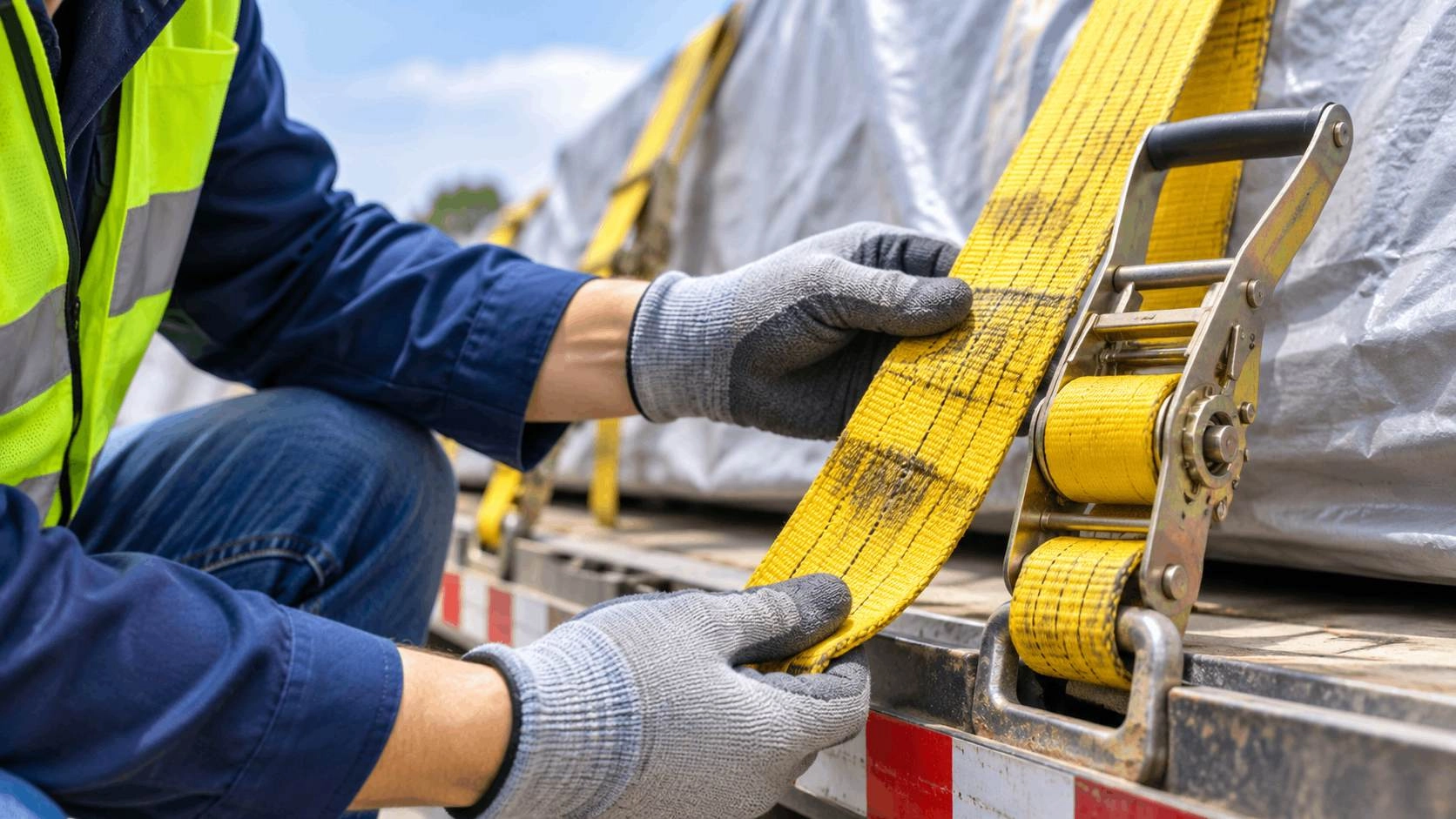
Before installing tie-down straps, operators should check the webbing, stitching, ratchet mechanisms, hooks, and identification labels.
Pay particular attention to:
Cuts, tears, and holes in the webbing
Frayed or broken fibers
Excessive abrasion or discoloration
Damaged stitching around load-bearing connections
Bent, cracked, or corroded hooks
Ratchets that do not lock or release properly
Missing or illegible WLL information
If any defect could compromise the strap's integrity, the product should not be used until it has been properly evaluated.
After Every Use
A post-use inspection helps identify damage that may have occurred during transportation.
For example, tie-down straps used to secure steel products or construction equipment may experience friction against rough surfaces. Straps used outdoors may also be exposed to rain, dirt, road salt, and other environmental contaminants.
After unloading cargo, operators should check for newly developed cuts, abrasion, hardware deformation, and contamination.
Cleaning and proper storage should follow the inspection.
During Routine Maintenance Checks
Businesses with frequent cargo transportation activities should establish scheduled inspections in addition to pre-use checks.
Depending on usage intensity, operating conditions, and company procedures, inspections may be organized weekly or monthly.
For example:
High-frequency operations: Straps used daily for heavy-duty cargo transportation may require more detailed checks at frequent intervals.
Moderate-frequency operations: Straps used several times per week should be included in a regular maintenance schedule.
Occasional operations: Straps used less frequently should still be inspected before every use and periodically during storage.
These are practical scheduling examples rather than universal regulatory intervals. Any stricter manufacturer instructions or applicable inspection requirements should take priority.
3. What Factors Affect Tie-Down Strap Inspection Frequency?
Not all tie-down straps experience the same level of wear. Some products operate in relatively clean and controlled environments, while others are exposed to demanding industrial conditions.
Understanding these differences helps businesses determine how frequently detailed inspections are needed.
Frequency of Use
Usage frequency directly affects the amount of mechanical stress placed on a strap.
Tie-down straps used several times every day experience more repeated loading, tensioning, friction, and handling than products used occasionally.
Frequent operation may accelerate wear around stitching, ratchet connections, and contact areas.
Businesses should therefore pay particular attention to high-use equipment and maintain clear inspection records.
Cargo Type and Weight
The characteristics of the cargo also influence strap condition.
Heavy machinery, metal products, construction materials, and irregularly shaped equipment may create higher contact pressure or localized abrasion.
Cargo with sharp edges can damage webbing even when the strap's Working Load Limit (WLL) is appropriate for the load.
Using edge protectors and suitable restraint configurations can reduce unnecessary damage.
Environmental Conditions
Outdoor transportation exposes tie-down straps to changing weather conditions.
Common environmental factors include:
UV radiation from prolonged sunlight
Rain and moisture
High and low temperatures
Road salt and corrosive substances
Dust, sand, and industrial contaminants
For example, polyester webbing generally offers good resistance to moisture, but prolonged UV exposure and mechanical abrasion can still contribute to deterioration.
Straps used in harsh outdoor environments may need more frequent detailed inspections than those stored and operated indoors.
Storage Conditions
Improper storage can shorten the service life of tie-down straps even when they are not being used.
Leaving webbing exposed to sunlight, chemicals, sharp objects, or damp conditions can cause unnecessary damage.
Straps should be stored in a clean, dry, ventilated location after use.
4. How to Inspect Different Components of Tie-Down Straps
A complete inspection should cover every load-bearing component of the strap assembly.
Checking only the visible webbing is insufficient because hardware and stitching defects can also affect performance.
Inspect the Webbing
Begin by examining the entire length of the strap.
Look for cuts, tears, holes, fraying, broken fibers, excessive abrasion, heat damage, and chemical deterioration.
Pay special attention to sections that regularly contact cargo edges, trailer surfaces, or other equipment.
A strap with damaged load-bearing webbing should be removed from service rather than reused based on an assumption that the remaining material is strong enough.
Check Stitching and Reinforced Areas
Stitching is responsible for connecting and reinforcing different sections of a tie-down strap.
Inspect the areas around hooks, loops, ratchet connections, and other load-bearing joints.
Warning signs include:
Broken or missing stitches
Loose threads
Separated seams
Visible deformation around reinforced sections
Do not attempt unauthorized repairs to load-bearing stitching. Improvised sewing cannot guarantee that the original rated capacity has been restored.
Examine Ratchet Mechanisms
Ratchet tie-down straps rely on mechanical components to apply and maintain tension.
Check that the handle moves smoothly and the locking mechanism engages correctly.
Look for rust, cracks, deformation, loose components, and signs of excessive wear.
A ratchet that slips, fails to lock, or cannot release properly should not remain in service.
Inspect Hooks and Connecting Hardware
Hooks and other fittings connect the webbing to vehicle anchor points or cargo securement locations.
Inspect them for bending, cracks, corrosion, sharp edges, and damaged safety latches.
The hardware should also be compatible with the intended anchor points.
Even when the polyester webbing remains in good condition, damaged hooks or connecting components may make the entire assembly unsuitable for use.
Verify Identification Labels
Product labels provide important information, including WLL, manufacturer identification, and applicable product specifications.
If the label is missing or unreadable, users may be unable to verify the strap's rated capacity and intended application.
Follow the manufacturer's instructions and relevant regulations for determining whether the product can remain in service.
5. When Should Tie-Down Straps Be Replaced?
Inspection helps identify damage, but replacement decisions are equally important.
There is no universal rule stating that all tie-down straps must be replaced after a specific number of months or years. Their service life depends on material quality, usage frequency, environmental exposure, maintenance, and handling practices.
Instead of relying only on age, businesses should use inspection findings and manufacturer guidance to determine when a strap should be removed from service.
Replace Straps with Damaged Webbing
Tie-down straps should be removed from service when they show defects that compromise webbing integrity.
Examples include:
Significant cuts or tears
Holes or severe abrasion
Broken load-bearing fibers
Heat or chemical damage
Severe discoloration associated with material deterioration
Other damage identified by the manufacturer as unacceptable
Do not assume that a strap remains safe simply because it can still be tightened.
Replace Straps with Damaged Stitching
Broken load-bearing stitching can weaken the connection between webbing sections and hardware.
If stitching is separated, torn, or visibly damaged, the strap should be removed from service unless an approved manufacturer repair procedure specifically permits restoration.
Replace Straps with Defective Hardware
Ratchets, hooks, and buckles should be replaced or the complete assembly removed from service when components show structural damage or cannot function correctly.
Examples include bent hooks, cracked fittings, severe corrosion, and ratchet mechanisms that fail to lock securely.
Replacing only one component should be done only when the manufacturer authorizes the procedure and the resulting assembly maintains its required specifications.
Replace Straps with Unverifiable Ratings
If the WLL label is missing, damaged, or unreadable, the strap's rated capacity may no longer be reliably established.
Where identification is required for safe selection or regulatory compliance, the strap should be removed from service until its suitability can be verified through an approved process.
6. Does the Material Affect How Often Tie-Down Straps Need Replacement?
Yes. Different webbing materials have different physical properties, environmental resistance, and maintenance considerations.
Understanding these differences can help buyers choose suitable products for their operating environments.
Polyester Tie-Down Straps
Polyester is widely used in cargo securement because it offers good tensile strength, relatively low stretch, and low moisture absorption.
Its advantages include:
Good dimensional stability under normal operating conditions
Relatively low water absorption
Good resistance to many common environmental conditions
Suitability for a wide range of transportation applications
However, polyester webbing can still be damaged by sharp edges, excessive abrasion, prolonged UV exposure, and incompatible chemicals.
Regular inspection remains necessary regardless of material quality.
Nylon Tie-Down Straps
Nylon offers good tensile strength and greater elasticity than polyester.
Its flexibility can be useful in certain applications, but higher stretch may not be desirable when minimizing cargo movement is a priority.
Nylon also absorbs more moisture than polyester, which can influence its properties under wet conditions.
When comparing polyester vs. nylon tie-down straps, buyers should consider cargo type, environmental conditions, and manufacturer specifications.
Neither material eliminates the need for routine inspections or condition-based replacement.
7. How to Extend the Service Life of Tie-Down Straps
Although tie-down straps naturally deteriorate over time, proper handling and maintenance can reduce unnecessary wear.
Businesses can adopt several practical measures to improve equipment durability.
Use the Correct WLL
Every tie-down strap has a specified Working Load Limit.
Selecting a strap with an appropriate WLL for the intended securement arrangement helps prevent overloading.
However, the WLL of an individual strap should not be confused with the breaking strength or the total capacity of a complete securement system.
The capacity of the hardware, anchor points, strap angles, and overall configuration must also be considered.
Use Edge Protection
When securing sharp-edged cargo, use suitable corner protectors or protective sleeves.
These accessories help reduce direct contact between the webbing and abrasive surfaces.
This is particularly important when transporting steel products, machinery, metal components, and construction materials.
Avoid Twisting and Over-Tightening
Install webbing flat and ensure that it is not twisted or knotted.
Excessive tension can place unnecessary stress on the webbing, stitching, and hardware.
Operators should follow the manufacturer's tightening instructions and applicable cargo securement requirements.
Clean and Dry After Use
Remove dirt, sand, oil, and other contaminants using cleaning methods suitable for the strap material.
Allow wet straps to dry completely in a well-ventilated area before storage.
Avoid aggressive chemicals and excessive heat.
Store Properly
Keep tie-down straps in a dry, clean location away from direct sunlight, chemicals, sharp objects, and excessive temperatures.
Organized storage racks or designated containers can help prevent accidental damage and make inspection easier.
8. Establish a Tie-Down Strap Inspection Schedule for Your Business
For transportation companies, distributors, and industrial operators, an organized inspection program is more effective than relying on occasional visual checks.
A practical program should combine pre-use inspections, post-use checks, scheduled detailed inspections, and clear replacement procedures.
The following table provides an example of how businesses can organize their maintenance activities.
Inspection Stage | Suggested Frequency | Main Inspection Focus |
|---|---|---|
Pre-use inspection | Before every use | Webbing, stitching, hardware, labels |
Post-use inspection | After every use | New damage, contamination, deformation |
Detailed inspection | At scheduled intervals | Overall condition and component wear |
Storage inspection | Periodically during storage | Moisture, UV exposure, corrosion |
Replacement assessment | Whenever defects are identified | Whether the assembly remains suitable for service |
This schedule is a general maintenance framework, not a substitute for regulatory requirements or manufacturer instructions.
Keep Inspection Records
Inspection records help businesses monitor product condition and identify recurring damage.
Useful information includes:
Strap identification or batch number
Product specifications and WLL
Date of inspection
Inspection results
Defects identified
Maintenance or replacement actions
For companies managing hundreds or thousands of tie-down straps, a simple tracking system can improve equipment management and purchasing decisions.
Train Employees
Employees should know how to inspect, install, tighten, release, clean, and store tie-down straps correctly.
Training should also explain how to recognize damaged webbing, defective hardware, and missing identification labels.
Most importantly, workers should understand that damaged straps must not be reused simply because they appear capable of holding a particular load.
9. What Should Buyers Consider When Purchasing Replacement Tie-Down Straps?
Replacement planning also creates an opportunity for businesses to review their existing equipment specifications.
Rather than purchasing identical products without evaluating their suitability, buyers should consider whether the current strap configuration matches actual operating requirements.
Confirm the Required Specifications
Before placing an order, verify:
Working Load Limit (WLL)
Strap width and length
Webbing material
Breaking strength
Ratchet or cam buckle configuration
Hook type and hardware specifications
Applicable safety standards
These details help ensure that replacement products are suitable for their intended applications.
Evaluate Manufacturing Quality
Reliable tie-down strap manufacturers should be able to provide clear product specifications and consistent production quality.
Buyers should pay attention to webbing construction, stitching quality, hardware assembly, and quality inspection procedures.
For wholesale and bulk purchasing, consistency between production batches is particularly important.
Consider Customization Requirements
Different transportation and industrial applications may require different strap lengths, widths, colors, hooks, and ratchet configurations.
Working with a manufacturer that supports OEM and customized tie-down straps can help distributors and importers meet different customer requirements while maintaining clearly defined product specifications.
Conclusion
Tie-down straps should be inspected before every use, checked again after use, and included in a scheduled maintenance program. However, replacement should not be determined by age alone. The actual condition of the webbing, stitching, ratchet mechanisms, hooks, and identification labels should guide decisions about whether a strap remains suitable for service.
For businesses that depend on reliable cargo securement, consistent inspection procedures, proper storage, employee training, and timely replacement all contribute to safer and more efficient operations. Choosing well-manufactured products is equally important. Zhongyi provides tie-down strap manufacturing solutions for different cargo securement applications, supporting distributors, wholesalers, and industrial buyers with product customization, consistent specifications, and dependable long-term supply cooperation.
RELATED NEWS
-
 Industry News Jul. 04, 2025Why Round Slings Are a Go-To Solution for Modern, Complex LiftsRead More

-
 Industry News Jul. 04, 2025Inside the Standard: EN 12195-2 and What It Means for Web Lashing SafetyRead More
-
 Industry News Oct. 29, 2026Polyester vs. Nylon Tie-Down Straps: Which Is Better?Read More


